
Sidereal vs Tropical. How real is the zodiac?
Some people argue that the sidereal zodiac is aligned with the reality of the constellations. What a mistake!
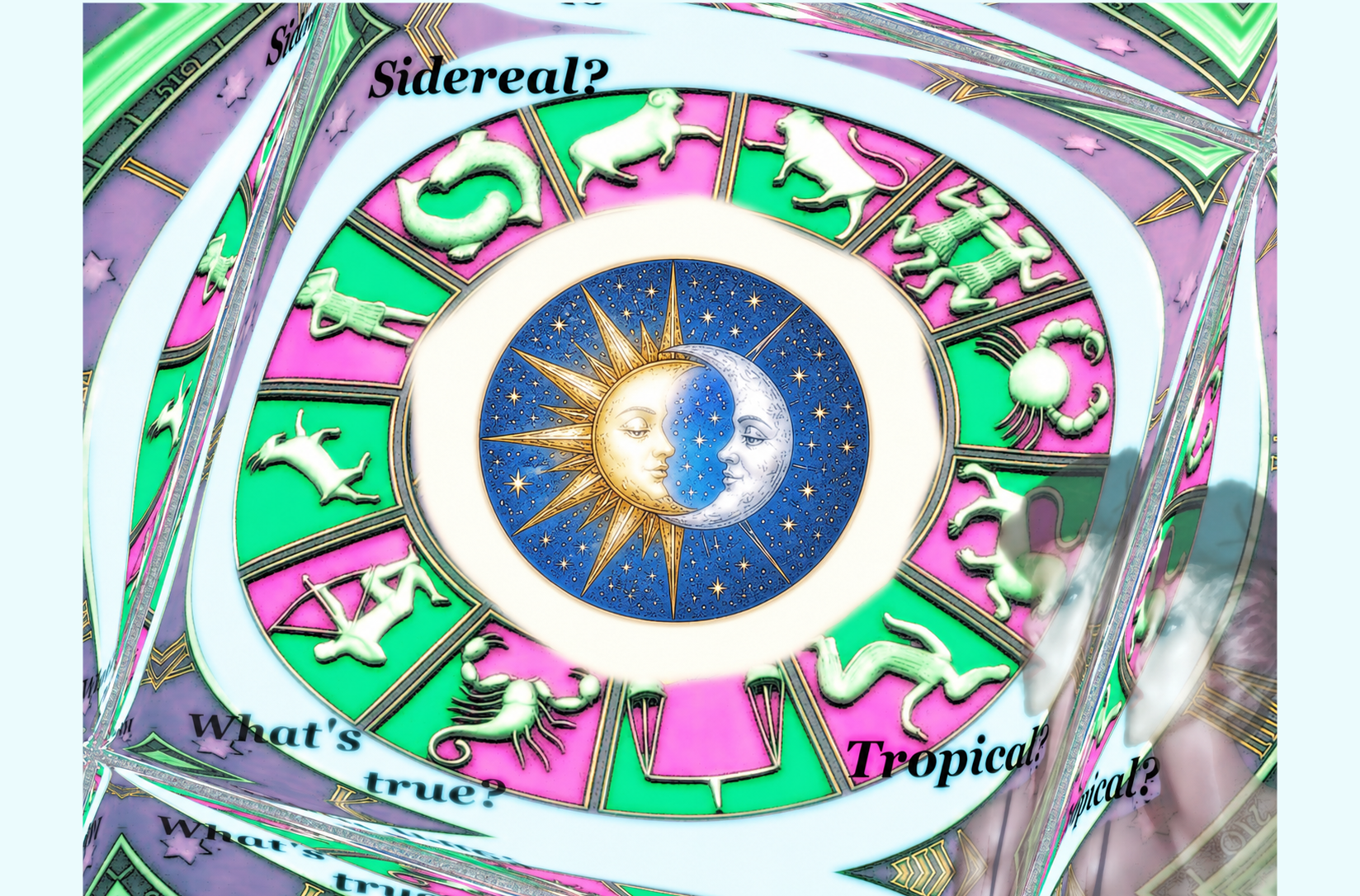
The constellations along the ecliptic do not look like 12 figures of equal size with neat borders.
The most widely used sidereal system uses the star Spica as the reference point. Zero degree Aries falls exactly opposite Spica. Taking it from there, it’s just maths. 12 times 30 degrees.
With the tropical system, we have the two equinoxes and solstices as incontestable astronomical events. The seasons are defined by them.
But then, what on earth or in the stars justifies subdividing the seasons in three equal parts?
If the reality of the natural world was the criteria, transitions between signs would not be that clear cut. There are times when we don’t know what to wear.
Notice that 360 degrees for the zodiacal wheel is not like the ‘real’ world either. The year is exactly 365 days and 6 hours.
What’s great with 360 degrees is that it can be divided easily and it’s a good approximation. We can pretend that the Sun moves at the speed of one degree per day and give meaning to these degrees.
Do you remember Plato?
He was thinking that the really real world was the ideal world of ideas - and that this natural world of ours is just a gross approximation.
Geometry and the perfect forms it describes is reality, that’s what Plato was busy thinking and writing around the turn of the 4th century BC. In the same time period, the Babylonians formalised the zodiac. It became ideal and mathematical. That’s a noticeable synchronicity.
If astrology works, it must be real, and if it’s not real in the natural world, then it’s real in the psyche.